Showing posts with label books. Show all posts

Sunday, July 7, 2013

Summer time and the living is easy


Well, if you aren't a procrastinating writer/blogger/opera lover like I am. Remember when I used to update everyday? I'm amazed I had the tenacity.

Let's see, what have I done to keep me away for the last few weeks?

*Gone to teach at English Summer Camp, in the wilds of Buckow (right outside Berlin). If that was not the most sophisticated summer camp that I have ever been to, I'll eat my hat. We had an actual house, with our own kitchen and bathrooms, and catered meals. It was less like work than it was play English language games with the kids all day and eat really good food. And run around in the forest.

*Been to two operas (The Pearl Fishers and Attila and Erwin Schrott's Berlin Rojotango concert. The first two I wrote about for BachTrack, so I didn't talk about them here, and the third I just didn't have time to review, given the hectic schedule I had in June.

*Watched Jonas Kaufmann be Awesome and Badass in Il Trovatore (which was also hilarious) in the weird-but-I-liked-it new Bayerische Staatsoper production by Oliver Py. We had a Twitter Block Party for it, so if you follow me on Twitter, you can read my thoughts there.

*Got into a huge fight with a PR person over the meaning and use of the word "butthead". Rather lost my taste for the internet for a few days after it devolved into character defamation.

*Spent a week curled up in my armchair tearing through Ben Aaronovitch's hilarious and wonderful Rivers of London series. This is me while I read it:


It's just that good.

Oh, and I changed the URL of this blog to more properly reflect my current internet name. So there's that.

I have something up my sleeve for August, but I'm not going to say what yet. You'll have to stick around and see. :-)

Wednesday, May 29, 2013

In the Cards: "The Stockholm Octavo"


The assassination of Sweden's Gustav III may be one of the more outrageous events of the turbulent 1790s, but it usually falls into shadow when compared to the execution of France's Louis XVI less than one year later. Indeed, outside of the realm of historians and Verdi fans, few people in day to day life realize that Sweden had a king who was shot at a masked ball at the Royal Swedish Opera. (Sadly, the original building was demolished in 1892, showing that man's desire to knock down beautiful old buildings and replace them with dubious new ones is not a new trait.)

Gustav III of Sweden met his fate in March 1792, when he was shot in the back and died days later of septicemia. Gustav had come to the throne twenty years earlier, after the death of his father, staged a coup against the reigning aristocracy, and reformed the country's political systems so completely that by the 1790s, there were two major camps vying for power-Royalists and Patriots (the latter made up of the former ruling aristocrats that believed their country was, for lack of a better term, going to hell in a handbasket). The situation had reached a boiling point by the time of Gustav's death, and it is this cauldron sedition and treachery that makes up the background of Karen Engelmann's debut novel, The Stockholm Octavo.

The plot of Verdi's Un ballo in Maschera revolves around a love-triangle of king-soprano-assassin and, to shake censors concerned about regicide in an unstable political climate, is set in Boston. The Stockholm Octavo, takes the same story and twists it a little. Instead of a sympathetic king or courtier, we have a lowly custom's officer with an interest in card games, women, and the Occult.

Emil Larsson, customs officer and card sharp, is ordered by his superiors to find a wife in order to maintain his position. To this end, he consults Sofia Sparrow, owner of an exclusive gambling salon and a seer. She lays out an octavo for Emil: a circle of eight cards that represent the people who will influence his path to happiness and love. In his quest to find the eight people represented in the cards, Emil is thrown into a dangerous world of politics, revenge, hidden loyalties, poison, and madness. We meet The Uzanne, a baroness and fan collector with a hatred for the autocratic Gustav that is so intense it borders on madness; a runaway apothecary with working knowledge of semi-poisonous soporifics, a dedicated fan maker, a Seer (based on a real soothsayer, Madame Arvidson, the Ulrica of the opera), and numerous functionaries and hangers-on.

Emil needs to find the eight people whom fate has decreed will guide him on his journey to love and contentment. His Companion, the person whose actions will shape his, is a widowed baroness with intensely anti-Gustav sentiments and a knowledge of the language of fans that makes her ruthlessness even more terrifying, in that no one takes her for anything more than a pampered woman. It is The Uzanne whom this story ultimately revolves around, and her machinations to end the reign of Gustav and restore the proper order to things. Emil himself plays only a tiny part; it is the constellation of characters moving around him, to either encourage or thwart (or both, or neither) the coming assassination. Alas for the reader, that singularly interesting premise falls flat in the telling.

There is a common rule, perhaps the golden rule, of fiction writers: Show, don't Tell. Never, ever, ever Tell if what you need to convey can be done so by Showing. Do not tell the reader "Let me tell you about X. X was born in France and grew up in a large family. When she was 18, she married the Count of S and came to live in G. She learned about the art of Z and sought out the best learning to eventually become a master of her field." Were you as bored reading that as I was typing it? This sort of writing usually doesn't make it passed the editorial stages or, if the author is absolutely unable to make a scene Showing the reader, can be made into dialogue. "I discovered the art of poisoning as a girl, and it intrigued me. Suddenly I had the power of God in my hands, to be used as I wished. Power, x. Can you imagine it? The sweet taste of secret knowledge, gleaned from years of researching ancient tomes." See, now that's fun. That's something the reader can sink their teeth into, because it adds another important aspect of a story: voice, which we'll come to in a minute.

Telling is especially bad if the author stops to tell us in minute detail what the character is wearing and how the room is set. No one cares. A brief, subtle mention of it will do.

From time to time, Engelmann falls into the trap of Telling. Not often, but enough that the discerning reader picks up on it. Her book is fast-paced, but it suffers from the narrator, Emil, pausing to tell us things that he could rather show us. This, though, is more a problem of Voice and its twin sister, Perspective, than anything else.

There are three different main perspectives in The Stockholm Octavo, and at least two minor ones. We have Emil, The Uzanne, and Johanna, the protégée and love interest. This is all very well and good, but the book itself is written in the First Person: the "I" perspective. Thus, we have Emil (who really doesn't do much besides vacillate between characters, wailing to himself) narrating the intimate thoughts and actions of events that he had no opportunity to ever see. The author uses a clever trick to get away with this: she puts a cast of characters who "witnessed" the event at the top of every chapter and passes it back as History. It works fine, but perhaps it would have been better to opt for the Third Person Omniscient, which allows the reader to get into each character's head without the narrator resorting to hearsay.

So you have an excellent premise with an unfortunate narrator and lots of awkward scenes that would have benefited from a simple change of voice.

This is not to say that The Stockholm Octavo is poorly written. Quite the opposite, in fact: it is a well-paced, well-plotted and well-told tale, with characters to love and hate. Unfortunately, there ARE technical details that keep the story from achieving that polish that comes to a truly excellent story. It reads a little like tonic water that has lost some of it's sparkle: still good, but ultimately leaving you dissatisfied.

The Stockholm Octavo by Karen Engelmann.
Three out of five stars.

Saturday, January 12, 2013

What I nabbed from home

You know how when you travel, you bring things back with you? And how, when you move places, you pack everything you own into boxes and shlepp it along? A little known story is that when I moved to Europe two years ago, everything I brought fit into a single carry-on suitcase (my father managed to spectacularly screw over my luggage allowance; don't ask). So when I went home to California this Christmas (for the first time since moving here), I knew I'd be taking back with me everything that I needed and had to leave behind.

Here's a short list of what made it into my suitcase:

*42 books-novels, biographies, yoga manuals, picture books (for my job)
*8 pairs of shoes, including a pair of strappy gold evening shoes and a pair of extremely strappy leather tango heels
*6 bars of Dr. Bronner peppermint soap (love that stuff, can't get it here)
*2 pairs of my mother's bed sheets and pillowcases
*8 magazines, for writing, yoga, and cooking
*1 bottle organic vanilla, because the Germans do not cook with liquid vanilla
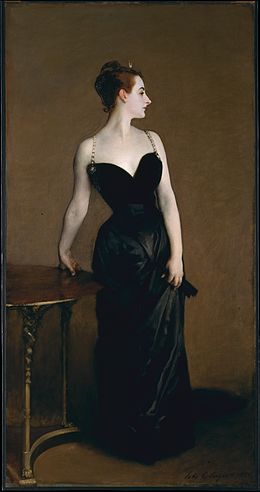
*3 posters: the above painting, a Met "Sonnambula" poster, and one other that I bought at the Met museum and never opened. I don't know what it is but I'm sure I'll like it.
*A blanket
*All the stuff I'd brought with me originally

All that fit into my trusted carry-on, my enormous suitcase (brought mostly empty for this very purpose) and my back pack. Alas, I was not able to fit my Japanese teapot and four matching teacups into any bag, but I'll get them this summer. My apartment now looks like a bomb went off, but I have my books, and my shoes, and I am happy.

Wednesday, January 2, 2013

Happy (somewhat belated) New Year!


Here, have a picture of Jonas Kaufmann in sparkles.:-)

Guys, I am home in California, and it is a riot. It's also really weird. I keep hearing English and Spanish instead of German and Turkish, and it's bizarre. Luckily, I am in the land of books, yoga, tamales, books, hot chocolates the size of my arm, books, my public library, my library's classical music section, books, In-n-Out cheeseburgers, funky avant-garde indie bookstores, buskers, books, and family. And books. Did I mention those?

I'm glad I brought home my giant, empty, suitcase, because it's being filled up with all of the lovely things (yoga magazine, a selection of my favorite books, organic soaps and shampoos that smell of peppermint and lavender...). I love California so much, especially the Monterey-Santa Cruz-San Jose triangle that I live in...but I find myself missing Berlin and the students I teach. Not the cold, though. It's so warm here it's disgusting (minimum 50 Farenheit, and people FREAK OUT about it, let me tell you).

More later, if anything interesting happens. Ciao for now!

Monday, August 6, 2012

The Lost Ones

I recently got my dear publisher, Zittaw Press, to relinquish to me the rights to my first published book, Lost Ones: The Ghosts of Paris. (Side note: they picked the title, which I've never particularly liked, but that's how it is).

The story is a YA novella, centering around the idea of an alternate-universe French Revolution, with magic. As per the cover blurb:

One hundred years after the French Revolution, the Terror still reigns in France. A rag-tag group of survivors, calling themselves the Lost Ones, huddle in the dreary ruins of a once magnificent palace. Protected by magic and assailed by ghosts, they work against the hunters who wish to destroy them. Brave Falstaff, the leader of the band; the librarian Benedick and his wife, healer Plum, protect an even more dangerous secret, for they alone hold the key that can save their future. After a violent storm, a young woman is found within the palace grounds. Who is she, and how did she come to be here? As they search for answers, Benedick and Falstaff make a discovery in the Parisian catacombs, a discovery that leads them to the sealed University, where no one has set foot since a monstrous event almost a hundred years before. What they find unleashes a danger that could kill them all, and leads to a battle that could cost them their very lives.

I was studying 18th century France at the time of writing, so there's a lot of history, a lot of spookiness (I do like me ghosties and ghoulies and things that go bump in the night), and a few catacombs and graveyards thrown in for good measure. Versailles itself is a character, which was terribly fun to write.

Anyone who would like to download Lost Ones can visit my page at Lulu: tinyurl.com/ct7beeq. The Lulu version is cheaper than what you'll find on Amazon, but buy there, first. :-)

Saturday, July 21, 2012

The Strange Case of the Composer and his Judge

I've gotten lucky this summer with the books I've been reading: they're almost uniformly fascinating, sink-your-teeth-into-them stories with strong plots, strong characterization, and darn fine storytelling. I can't tell you how much I value that. One of the most recent books I read was the thoroughly enjoyable The Strange Case of the Composer and his Judge, by Patricia Duncker.

This book tells the story of a French juge d'instruction, Dominique Carpentier, who specializes in gathering information on fanatical religious sects. When one of these cults, known only as the Faith, commits mass suicide, the Judge (as she is known throughout the story) is pitted against the enigmatic Composer, Friedrich Grosz, who is connected to every single one of the dead. Her quest to find out what he knows about the sect takes her all over Europe, from sunny Provence to England to the Lubeck Festival in Germany. And through it all runs music.

The entire book is a masterpiece of sound and color, light and darkness, heat and cold. Duncker weaves a vivid picture of sweltering summer days spent eating lunch on the terrace of a Provencal vineyard, shivering winter days wandering from one German bookbinder to another, and two magical nights at the opera. Because that's the thing: the Composer is world-famous, one of the heads of the international music scene. He's very clearly modeled on Herbert von Karajan (whom I pictured throughout) or Daniel Barenboim. And he is not afraid of the Judge, or angry at her for her pursuit of his knowledge: rather, he loves her for it. And he uses what he knows best to attract her: music.

The Judge has no use for classical music, but still attends two operas: the Lubeck Festival's Tristan and a concert performance of Fidelio at Royal Albert Hall. The author clearly has a fine grasp of opera, clearly enjoys it herself. As her Composer says of Tristan, when learning that the Judge has never been to an opera before,

"Madame Carpentier, you are a very corageous woman. I have conducted this opera many, many times in the course of my professional life. Yet each time I find something new, fresh and miraculous in the score. So, even for an old hand like myself, the familiar remains strange, uncharted, even obscure. Let me advise you how to listen. Do not rationalize. I know that you are a very rational person. A Judge must be so, to sift the evidence. But put that part of yourself aside. Do not assess things or try to calculate. Or really even try to listen. Let go of everything...Yes, let go. And give the music time to speak to you. ...If you are not an aficionado you will be harder to persuade. We will give you our best. Our very best"

She then goes on to describe a Tristan so sensual as to be almost erotic. The Fidelio scene is much the same. Duncker uses words in a way that you really do hear the music, even if you've never actually listened to either opera before. The writing is sensuous, elegant, and the story interesting. The characterization is strong, from the cool Judge to the passionate Composer to the overbearing chief of police and the sylph-like daughter of the deceased.

I give it five stars, and will be reading it again.

Friday, December 30, 2011

The Woman in Black


All my life, I've loved ghost stories. As a child, I used to rent them from the library by the bagful and then read them for hours after bedtime, during which time I'd scare myself so silly that I would invariably end up in bed with a sibling or my parents, convinced that some vengeful spirit was going to get me. And still, I kept renting them. Because, you see, reading allows the imagination to paint a picture of the terror of ghost stories. The writer puts her words in such a way as to inspire terror, or humor, or sadness. And when you close the book, it's the memory of the story that haunts you, not the terrifying images of a movie.

All this is to say, I am going to see The Woman in Black when it comes out, and I will inevitably be sleeping with the lights on for days afterwards.

Tuesday, October 25, 2011

31 Days of Halloween: Day 25


They may not celebrate Halloween, but guys, I am here to tell you that German Octobers are fierce. Cold, blustery, smelling of woodsmoke and bonfires...it's the perfect weather to curl up in front of the fire with a spooky book. I like The Vanishing of Katharina Linden, by Helen Grant, for this purpose. The story is set in Germany and focuses around the mysterious vanishings of multiple people, set against a backdrop of folklore, history, and local legend. Five stars, and I couldn't put it down when I read it.

Are you all reading anything interesting?

Thursday, October 6, 2011

31 Days of Halloween: Day 6


Due to having company over and having Too Much Fun, blogging had to take the backburner for a few days. BUT I'm back now and let's resume our normal schedule.

I just finished reading Henry James's The Turn of the Screw. It both scared the hell out of me and really, really irritated me. The complete irrationality of the governess and the lack of any real semblance of evil at Bly House made me sit down at my computer and write a grumpy email to my big brother, who has a PhD in Gothic Literature. It went something along the lines of "Just finished "Turn of the Screw"; please enlighten me because it's going to be with me for a loooooong time."

My current basic opinion is that the Governess was simply crazy and hallucinated the whole haunting. I want literary theory to back me up. Or the Britten opera, which I've never seen or heard before, but which currently fascinates me.